She's Been Living With This for 3 Years. She Finally Asked for Help.
Three Years of Silence: The Moment of True Clinical Trust
She had her last baby three years ago. Since then, something has changed — she knows it, her body knows it.But she’s never said it out loud to a doctor.Until today. Until you.
1
The Cultural Weight: Why Symptom Disclosure is a Sacred Bond
Post-partum pelvic floor damage is one of the most underdiagnosed, undertreated conditions in Gulf women’s health. Not because patients don’t suffer — but because the conversation never happens.In Arab culture, these symptoms carry a weight of silence that no other medical complaint does. She will see you for her annual check ten times before she brings this up. And when she does, she is trusting you with something she hasn’t told her husband.If you can’t offer her more than a referral, she will go home and say nothing to anyone for another three years.
2
Beyond Referrals: Restoring Function and Dignity in Pelvic Health
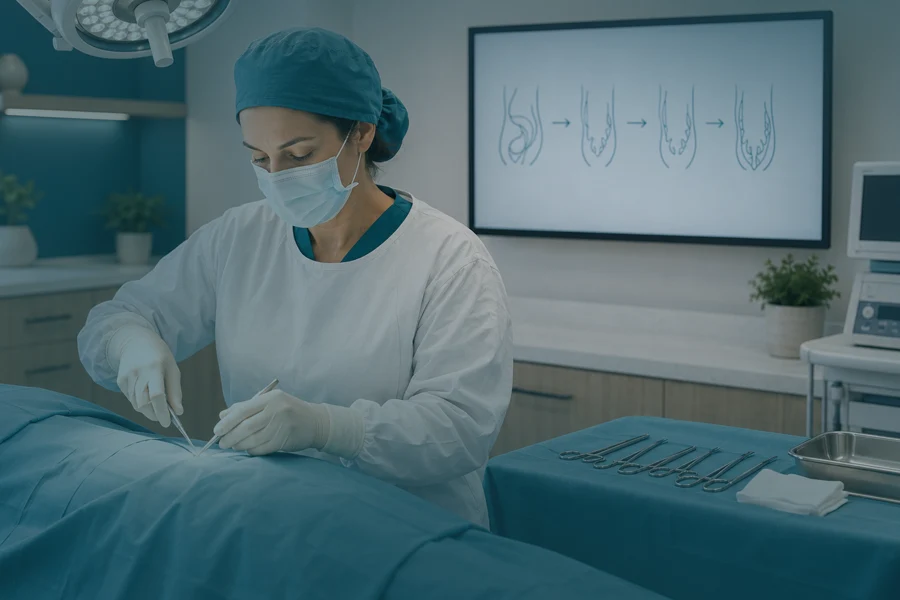
Anterior repair, posterior repair, vaginoplasty, and perineal revision are not niche procedures. They are the standard of care for pelvic floor dysfunction following vaginal delivery — and they are within the skillset of every trained OB-GYN who has been shown how to do them properly.The sequencing matters. Posterior before anterior is a common error that creates unnecessary tension and increases the risk of dyspareunia.In Videos 23 and 25, I walk through two full anterior and posterior repair cases — including the decision-making, the sequence, and the closure technique that gives the most durable result.
3
Be the Solution: Empowering Your Practice to Close the Gap
When she finally finds the courage to ask, you need to be ready to offer her more than a referral. Module 2 gives you the complete reconstructive toolkit — 8 procedures, real patients, no simulators.Because she’s waited long enough.
Restore pelvic function with flawless surgical sequencing.