You've Referred This Case 11 Times This Year. You Didn't Have to.
The Referral Loop: Why Your Patient is Still Waiting
Uterine descent with posterior wall prolapse. You see it regularly.Every time, you write the referral. Urogynaecology. Or the pelvic floor surgeon at the other hospital.She waits four months for an appointment. She may not go. And even if she does — she didn’t choose that doctor. She chose you.
1
Reclaiming Competency: The Myths of Combined Repair
Cervical shortening combined with posterior repair is considered a subspecialty procedure by many OB-GYNs in the Gulf. It’s not. It’s a procedure that sits well within the competency of any surgeon who has been properly trained in it.The hesitation isn’t lack of ability. It’s lack of exposure. Most surgeons have watched one or two cases in fellowship, in passing, without the detailed instruction needed to perform it independently.
2
Ligament First: The Secret to Long-Term Structural Success
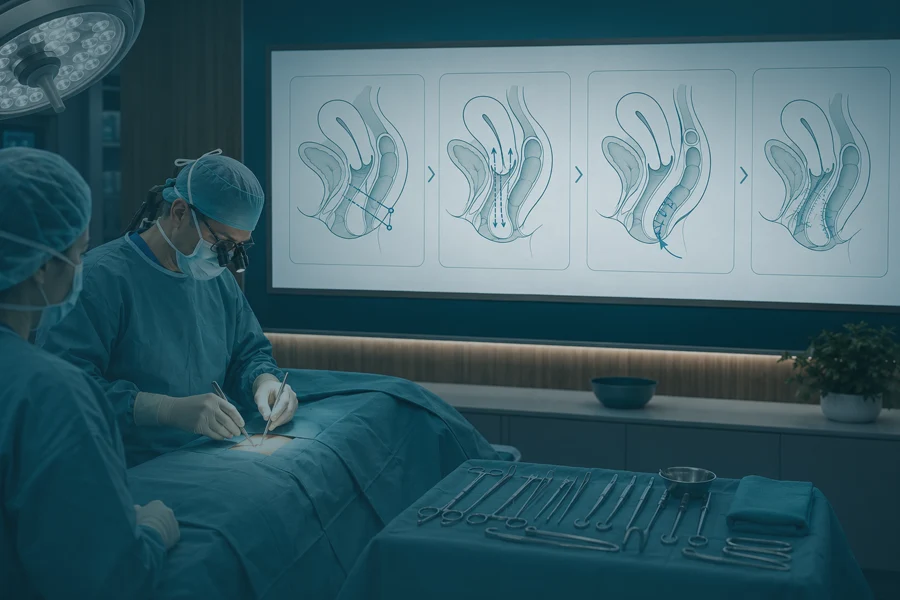
The most important technical principle in combined cervical shortening and posterior repair is managing the cardinal and uterosacral ligaments before addressing the posterior wall — not after.Doing this in reverse creates an unsupported apex that will prolapse again within 2-3 years regardless of how good the posterior repair looks.Video 26 is 32 minutes of the full combined procedure — including the plication sequence, the level of suspension, and the closure.
3
Retain Your Patients: Transitioning from Observation to Operation
Stop referring out what you can do. Module 2 covers the full spectrum of reconstructive procedures that belong in your hands — not someone else’s waiting list.7 videos. Real cases. Permanent access.
Master combined repairs and stop the referral loop.